

Ball Screw
Why Choose Us
Established in 2002, Lishui Yongrun precision machinery company is located in Lishui, Zhejiang Province, China, covering an area of more than 28,000 square meters. The company has more than 200 employees, including more than 50 senior technical staff. We specialize in producing DFU 3205 Ball Screw, SFU 2005 Ball Screw, SFU1605 Ball Screw, High Precision Ball Screw, High Load Ball Screw, Ball Screw Rod With Nut, Rolled Ball Screw, and other Ball Screw.
Wide Product Range
Our production of linear rail, ball screw, linear module, linear optical axis, linear bearings, roller needle bearings, rod end joint bearings and a series of high-precision, high-tech linear transmission products.
Wide Range of Applications
Our products are widely used in automated machinery and equipment, such as machine tools, printing machinery, chemical machinery, medical machinery, woodworking machinery and robots, etc.
Products Sell Well
We have established long-time cooperation relationships with customers from all over the world, including Asia, Europe, Africa, North America, South America and many other regions and countries, and have won customers' agreed recognition and praise!
Quality Assurance
Our many product have been granted national patents and have reached a number of international testing and certification standards.
-
DFU3205 Ball Screw
DFU ball screw are better than SFU in load capability and rigidity for the nut is longer and inside
-
DFU1605 Ball Screw
A ball screw with nut is a mechanical device that converts rotary motion into linear motion. It
-
DFU1604 Ball Screw
A ball screw with nut is a mechanical device that converts rotary motion into linear motion. It
-
SFU2005 Ball Screw
A ball screw with nut is a mechanical device that converts rotary motion into linear motion. It
-
SFU1610 Ball Screw
A ball screw with nut is a mechanical device that converts rotary motion into linear motion. It
-
SFU1605 Ball Screw
A ball screw is a mechanical linear actuator that interprets rotational motion to linear motion
-
SFS1605 Ball Screw
Ball screws are used in aircraft and missiles to move control surfaces, especially for electric fly
-
SFS1210 Ball Screw
Ball screws are used in aircraft and missiles to move control surfaces, especially for electric fly
-
SFS1205 Ball Screw
Ball screws are used in aircraft and missiles to move control surfaces, especially for electric fly
-
High Load Ball Screw
Pitch:20mm. Diameter:16mm/20mm/25mm/32mm/40mm/50mm. Nut type:single nut. Precision:C7 /C5.
-
Rolled Ball Screw
Ball screws and lead screws are mechanical linear actuators that are commonly used to translate
-
Ball Screw Rod With Nut
Ball screws and lead screws are mechanical linear actuators that are commonly used to translate


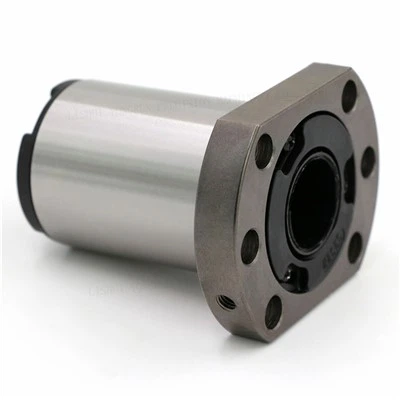
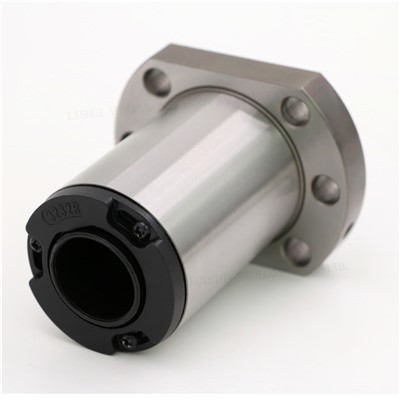


We have been committed to the ball screw drive industry high quality research and development and production, no concerns for you to solve any product problems!
What is Ball Screw
A ball screw (or ballscrew) is a mechanical linear actuator that translates rotational motion to linear motion with little friction. A threaded shaft provides a helical raceway for ball bearings which act as a precision screw. As well as being able to apply or withstand high thrust loads, they can do so with minimum internal friction. They are made to close tolerances and are therefore suitable for high-precision applications. The ball assembly acts as the nut while the threaded shaft is the screw. If you want to know the specifications and prices of Ball Screw, please contact us!

Advantages of Ball Screw
Ball Screws Are Highly Efficient
Ball screws feature rolling elements, such as ball bearings, that circulate within the helical groove of the screw. This rolling motion reduces friction significantly, resulting in higher mechanical efficiency. As a result, ball screws require less input power to achieve the same linear motion as traditional screws. This means that ball screws are able to convert more of their rotary motion to linear motion more quickly than other types of screws.
Ball Screws Are Accurate
The circulating ball bearings in ball screws contribute to smoother and more precise linear motion. This characteristic makes ball screws ideal for applications where accuracy and repeatability are critical, such as in CNC machinery and robotics. If a machine requires a screw with a high amount of accuracy, a ball screw is the way to go. Depending on whether you choose a ground or rolled ball screw, the exact level of precision can vary from device to device.
Ball Screws Lessen Friction
The ball bearings of a ball screw serve to reduce friction as the nut moves along the shaft of the screw. This results in less wear to the device in addition to a longer lifespan.
Ball Screws Are More Cost-Effective
Ball screws are often used as an alternative to hydraulic or pneumatic systems since they use less external power. This, combined with their long lifespans, makes ball screws a cost-effective option.
Reduced Backlash
The design of ball screws inherently minimizes backlash. The rolling motion of the ball bearings and the helical groove contribute to a more direct and responsive transfer of motion, reducing the clearance between the screw and nut.
Enhanced Speed and Acceleration
The reduced friction in ball screws allows for higher speeds and accelerations without sacrificing precision. This makes ball screws well-suited for applications requiring dynamic and rapid movement.
Longevity and Maintenance
The rolling motion in ball screws reduces wear and tear, contributing to a longer lifespan. Additionally, ball screws often require less frequent maintenance compared to traditional screws.
Types of Ball Screws
Rolled Thread Ball Screws
Rolled thread ball screws are the most common type of ball screws used in the industry. The manufacturing process for these screws involves cold forming the screw and nut threads, resulting in a smoother surface finish and a higher lead accuracy. Rolled thread ball screws suit low to moderate-load applications and offer high efficiency and fast speeds.
Ground Ball Screws
Ground ball screws are manufactured using precision grinding methods rather than cold forming. The result is a more precise and accurate screw with a higher lead accuracy than rolled thread ball screws. Ground ball screws have higher load capacity and are available with preload for high-rigidity applications. They are more expensive than rolled thread ball screws but are a great option for high-end applications with stringent accuracy requirements.
Precision Ball Screws
Precision ball screws are designed to deliver the highest accuracy and repeatability in positioning applications. They are manufactured using advanced techniques, including precision grinding of the screw, nut, and balls. Precision ball screws offer high axial rigidity, low friction, and excellent wear resistance. They are used in applications that require sub-micron positioning accuracy, such as semiconductor manufacturing and aerospace systems.
Miniature Ball Screws
Miniature ball screws are designed for small space applications or applications that demand high accuracy with limited space. They are available in various diameters ranging from 3mm to 16mm with small lead pitches. They offer low friction and high precision with relatively low load capacity. Miniature ball screws are used in medical devices, laboratory equipment, and microelectronics.
Stainless Steel Ball Screws
Stainless steel ball screws are made of corrosion-resistant and high-strength material, making them suitable for applications that require high durability and resistance to harsh environments. They can withstand high temperatures and humidity and offer high reliability and stability. Stainless steel ball screws are used in the food, beverage, chemical, and marine industries.
Application of Ball Screws
Precision X/Y Positioning Tables
Dimensional inspection tables come in a wide variety of designs, shapes, and styles and are widely used in manufacturing, inspection, and other related research applications. In general, they typically employ a precision ground ball screw system in order to achieve the level of precision required to position the tables for a given application. The ground ball screws at the heart of both large and small positioning tables are driven by servomotors. These servomotor/ground ball screw systems are able to attain extremely high levels of precision (1 microinch in certain cases) with excellent repeatability.
Steppers Used in Lithography Equipment
Ball screws are also present in step photolithography machines that fabricate cutting edge microscopic integrated circuits which have helped to drive huge advances in raw computing power. At a high level, photolithography is a microfabrication process that harnesses reactions caused by light exposure to thin film substrates present on silicon wafers. This process effectively etches geometric patterns onto the wafers, which forms the foundation of the integrated circuit. In order to accomplish this, a component called a stepper controls the position and location of the light exposure on the wafer and therefore must be able to operate on a microscale at extremely high degrees of precision.
Within this stepper, in a similar fashion as the X/Y positioning tables, the ball screw actuator is paired with a servomotor and a harmonic gear reducer. Only high precision ground ball screws are capable of achieving the high precision and repeatability that is required to precisely control the light exposure on the wafers to the high levels of repeatability that is required for the process. These precision ground ball screws operate smoothly, quietly, and efficiently and are the best choice for a machine application that requires a similar level of precision as the lithographic machine application.
Automotive Power Steering
Finally, the most commonly encountered ball screw in everyday life is the typical automobile's power steering system. To contrast the previous two examples, the typical automobile power steering system does not require nearly the same degree of precision and positional repeatability that the X/Y table requires. The rotary motion that the driver applies to the steering wheel rotates the ball screw, translating to the corresponding ball nut which acts as a piston within the pressurized fluid system at the heart of the of the automobile's power steering. The ball nut engages the Pitman arm via mating teeth on its underside. This Pitman arm serves as the primary linkage from the power steering box to the center link that actually moves the wheels. From this illustration, it's not too difficult to see how the motion of the ball nut moves the Pitman arm, which controls the motion of the center linkage and the motion of the automobile's front wheels.
For an application like automotive power steering, rolled ball screws are feasible and far more economical due to the fact that the main function of the ball screw is simply to convert rotatory motion into linear motion in the power steering piston. Because of this, a rolled ball screw nut is more than adequate to achieve the motion translation and lower degree of positioning required for this application.
How to Choose Ball Screws
Precision and Preloading
Ball recirculation inside the ball nut can affect precision and repeatability. As a result, ball nuts are available with a range of pre-load options to reduce or remove the axial play as they rotate around the screw. This allows for better repeatability, for example, because no motion is lost from the clearance in the balls as they reengage.
There are several techniques for pre-loading.
Some common methods include oversizing the balls inside the nut housing; using the so-called "double-nut" or "tension nut" method; or by using a manufactured offset in the raceway spiral to change the angle of ball engagement (the "lead shift" method) and deliberately force the balls into a pre-load condition.
Each method has its advantages and disadvantages, but all serve to minimize or eliminate backlash between the nut and screw.
Speed Considerations for Ballscrews
There are two different speed factors to consider when it comes to sizing ball screws; characteristic speed and critical speed.
The characteristic speed depends on the limitation of the bearing system, and what speed it can withstand. This is an industry standard for a variety of bearings, indicating speed limits that should not be exceeded in operation.
Controlling criteria are primarily temperature levels, vibration or other operating limits of the bearing, and inertia of the moving components within a bearing. By optimizing a particular design, manufacturers can improve the speed factor.
Critical Speed
Critical speed is essentially the rotational speed at which the ball screw will start to vibrate and introduce excessive oscillation (known as screw whip). This is heavily dependent on the length of the screw along with the mounting support for the end bearings.
Critical speed is a result of physics alone. However, there are a few things you can do to make sure that the screw speed remains outside the critical speed range. These include increasing the screw diameter, choosing appropriate end bearings, and using screw supports.
Lubrication
Because ball screws are a bearing system, they'll need some type of lubrication to avoid metal-to-metal contact of the balls in the raceway. While the lubrication choice can be either oil or grease, it's advisable to avoid solid additives (such as graphite) as they will clog the recirculation system.
2 type grease is recommended but it should also depend on the application, whether food-grade or another special type of lubrication is required.
The lube amount will be fixed, but the frequency of lubrication will vary depending on factors such as the move cycle characteristics, or contamination in the environment.
Maintenance Tips for Ball Screws
Why: Contaminants such as dust, debris, and metal particles can significantly impact the performance of ball screws. Keeping the system clean is crucial to prevent premature wear and reduce the risk of damage to the ball bearings.
Maintenance Tip: Regularly clean the ball screw assembly, paying attention to the exposed parts. Use a mild detergent or a recommended cleaning solution to remove contaminants. Avoid using high-pressure air, as it may force particles into the ball nut.
Why: Proper lubrication is essential for reducing friction and minimizing wear between the ball bearings and the screw shaft. Insufficient or improper lubrication can lead to increased friction, heat generation, and accelerated wear.
Maintenance Tip: Follow the manufacturer's recommendations for lubrication intervals and types of lubricants. Ensure that the lubricant is compatible with the operating conditions, and apply it consistently to maintain smooth operation.
Why: Backlash, or the clearance between the screw and nut, can affect the precision and accuracy of linear motion. Monitoring and addressing excessive backlash can prevent issues related to imprecise positioning.
Maintenance Tip: Periodically check for backlash using appropriate measurement tools. If backlash exceeds acceptable limits, consult the manufacturer's guidelines for adjustments or replacements. Addressing backlash issues promptly contributes to improved system performance.
Why: Over time, ball screws may experience wear on the ball bearings, screw threads, or other components. Regular inspections can help identify signs of wear and allow for timely maintenance.
Maintenance Tip: Conduct visual inspections of the ball screw assembly. Look for signs of pitting, scoring, or irregularities on the screw shaft and ball bearings. Replace any worn components according to the manufacturer's recommendations.
Why: Operating conditions, such as temperature and load, can impact the performance of ball screws. Monitoring these conditions helps identify potential issues and allows for adjustments or modifications as needed.
Maintenance Tip: Keep an eye on temperature variations and load changes during operation. If conditions deviate from the recommended parameters, investigate the cause and make necessary adjustments to prevent excessive wear and stress on the ball screw.
Frequently Asked Questions
Q: How to choose a suitable ball screw lead?
Ball screw lead selection: The selection of the lead is related to the required motion speed, system, etc. It is usually selected from: 4, 5, 6, 8, 10, 12, 20, the size is larger, and the lead is generally available Choose larger (mainly consider the bearing tooth thickness). When the speed is satisfied, generally choose a smaller lead (to improve the control accuracy); for the occasions requiring high speed, the lead can exceed 20, and the lead can generally be approximately equal to the nominal diameter for a ground screw (Limited by the spiral angle of grinding), such as 32 (32*32), 40 (40*40), etc., of course, It can also be larger (non-grinding, but rarely considered). The larger the lead, the larger the rotation component under the same conditions, the greater the period error and the faster the speed. Therefore, in general high-speed occasions, flexibility is required, and some accuracy requirements are abandoned, and the significance of the clearance requirements becomes smaller (the lead accuracy deviation increases). Therefore, the large-lead screw is generally a single nut.
Q: What is a ball screw CNC?
Q: What type of material is ball screw?
Q: What is the difference between a screw and a ball screw?
Q: Why is it called a ball screw?
Q: What is ball screw efficiency?
Q: Is a ball screw a lead screw?
Q: What is the structure of a ball screw?
Q: What is ball screw length?
Q: Why are ball screws so expensive?
Q: What are common ball screw sizes?
Q: How many types of ball screws are there?
Q: What causes ball screw failure?
Q: What is the difference between a ball screw and a jack screw?
Q: How fast are ball screws?
Q: Are ball screws self-locking?
Q: Does a ball screw have two circuits?
Q: What is the lead of a ball screw?
As one of the most professional ball screw manufacturers and suppliers in China, we're featured by quality products and good service. Please rest assured to wholesale customized ball screw at competitive price from our factory. For free sample, contact us now.
