

Linear Guide
Why Choose Us
Established in 2002, Lishui Yongrun precision machinery company is located in Lishui, Zhejiang Province, China, covering an area of more than 28,000 square meters. The company has more than 200 employees, including more than 50 senior technical staff. We specialize in producing DFU 3205 Ball Screw, SFU 2005 Ball Screw, SFU1605 Ball Screw, High Precision Ball Screw, High Load Ball Screw, Ball Screw Rod With Nut, Rolled Ball Screw, and other Ball Screw.
Wide Product Range
Our production of linear rail, ball screw, linear module, linear optical axis, linear bearings, roller needle bearings, rod end joint bearings and a series of high-precision, high-tech linear transmission products.
Wide Range of Applications
Our products are widely used in automated machinery and equipment, such as machine tools, printing machinery, chemical machinery, medical machinery, woodworking machinery and robots, etc.
Products Sell Well
We have established long-time cooperation relationships with customers from all over the world, including Asia, Europe, Africa, North America, South America and many other regions and countries, and have won customers' agreed recognition and praise!
Quality Assurance
Our many product have been granted national patents and have reached a number of international testing and certification standards.
-
EGH20SA Linear Guide
This linear guide block EGH15CA is EC series, it offers a low profile, high load capacity, and high
-
EGH15CA Linear Guide
This linear guide block EGH15CA is EC series, it offers a low profile, high load capacity, and high
-
EGH15SA Linear Guide
Availiable guide rail dia:Range from 15mm to 65mm. Precision:H. Structure:Slide Rail + Slide Block.
-
HGW25HC Linear Guide
YR offeres two type blocks of flange type and square type, 25 mm Heavy load flange type block
-
HGW25CC Linear Guide
Linear bearing is a kind of product which has the guiding function of sliding bearing and can make
-
HGW20HC Linear Guide
High precision linear guide are used for linear reciprocating applications. They have a higher
-
HGW20CC Linear Guide
High precision linear guide are used for linear reciprocating applications. They have a higher
-
HGW15CC Linear Guide
High precision linear guide are used for linear reciprocating applications. They have a higher
-
HGH25CA Linear Guide
Product DescriptionLinear guides provide precision low friction guidance of payloads for industrial
-
HGH20CA Linear Guide
Due to the strict control of the manufacturing precision, the linear guide rail measurement can be
-
HGH15CA Linear Guide
The Youright linear guide rail slider is extensively used in machinery processing centers, device
-
China Slide Block Bearing
High precision linear guide are used for linear reciprocating applications. They have a higher


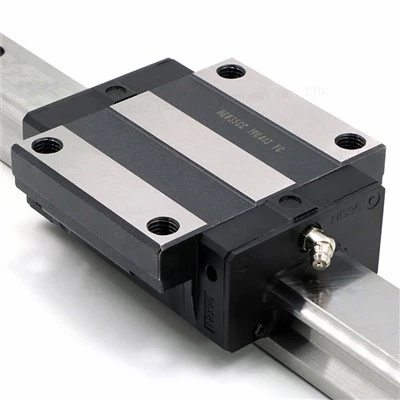


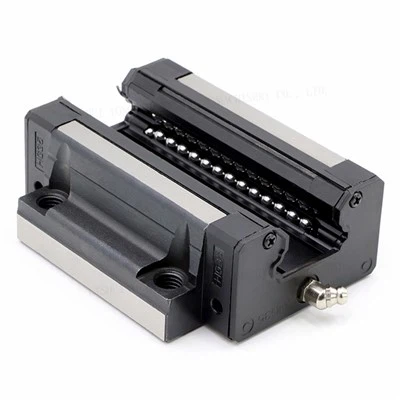
With strong dust-proof design, prevents abnormal chips getting into the blocks and rails,extending service life, making applicable to contaminative environment.
What is Linear Guide
A Linear Rail System is designed to support the movement and load of a piece of equipment in a linear way, either vertically or horizontally. A relatively simple piece of mechanical equipment designed to do a very simple job well, it lets you move things smoothly and safely through the manufacturing or packaging process. The only real complexity lies in the different names used for Linear Rails: linear guide rails, linear guides, linear guideways, linear slides, and linear guidance systems. Whatever you prefer to call it, a Linear Rail efficiently moves loads along a determined horizontal or vertical path with a minimum of friction or resistance. If you want to know the specifications and prices of Linear Guide, please contact us!
Assembly is Simple and Fittings Are Universal
At present, linear guide products have become large-scale, standardized accessories, not only convenient for customers to choose, but also very convenient in assembly. Of course in the interchangeable performance is also cannot ignore, a sliding block and guide everyone can separate find suppliers, even if in the future after the use of happened in the process of wear and tear, can also through other suppliers parts processing, the characteristics of good interchangeability these consumers would be convenient for us a lot about it.
Cost-effectiveness
Linear guide rail has simple internal structure design and can be mass produced. And the light weight, corrosion resistance and interchangeability of this guide have achieved the characteristics of easy assembly, can be used in all kinds of CNC machinery and equipment transmission components. In addition to cost control, there is a good competitive advantage in price.
Low Noise at High Speed
Now linear guide has basically adopted ball type technology, the market is used in double axis high-speed linear guide, embedded with double row bearings, so that the bearing of mechanical mill will be completely driven, will not reduce its running speed because of ball circulation. The circular motion that can be obtained by using this technique greatly reduces the noise.
Resist Wear
The high-speed linear guide is partially made of high carbon chromium bearing steel with strong wear resistance. After heat treatment and density grinding, the surface hardness of the linear guide is above 70 HRC, which can effectively extend the life of the linear guide.
Linear Rail Has Interchangeability
Because its own situation is used in machinery with high precision, the precision of production and manufacturing will be more strict control, and the design of the slider and the reholder can prevent the removal of the steel ball, so its part of the precision can be exchanged for use.
Automatic Oil Supply
Linear slide rail on the slide block device nozzle, could automatic lubricating oil machine, avoid the sliding way led inadequate lubrication contact surface of the metal bed directly friction loss, ATO industrial antomation linear slide rail adopts special beam system structure design, can bear the load of left and right, up and down at the same time avoid the machine running accuracy is bad.
Types of Linear Guide
Dovetail Rails
These are linear rails with simple surface bearings that rely on lubrication and a low coefficient of friction. The dovetail-shaped protrusion that fits into an identical negative geometry gives them their name.
The protrusion is normally on the stationary rail or foundation, while the carriage's negative is built into it. A dovetail table is a term used to describe this setup. Dovetail rails are tough, with the ability to endure radial and lateral loads. Large machine tools, such as lathes, shapers, and milling machines, are commonly utilized with these.
Boxway Rails
Boxway rails, like dovetail rails, are simple surface bearings. However, instead of a dovetail-shaped protrusion, these feature a square gib with T-shaped flanges at the top.
Due to the higher projected surface area in contact between the carriage and the rail, they can handle stronger loads than dovetail rails.
Sleeve Bearing Slides
This type uses cylindrical surfaces instead of a matching tongue and groove shape. Bushings and journals are the terms for these types of surfaces. The bushing is a hollow cylinder built into the carriage, whereas the journal is a lengthy shaft that serves as the base's guide rail.
The ease of use and capacity to handle weights applied in any direction are two advantages of using sleeve bearing slides. They are not as sturdy as dovetail and boxway slides, hence they are only suitable for light to medium weight applications.
Linear Ball Bushings
This type is analogous to sleeve bearing slides; however it employs ball bearings instead of simple bushings. Recirculating ball bearings are included within the bushings. The recirculation might be tangential or radial in nature. The return path of the balls in tangential recirculation is oriented from the side or tangent to the shaft. This allows for a more compact design. The return path in radial recirculation, on the other hand, is perpendicular to the axis. This enables for the installation of more weight-bearing rows, resulting in higher load capabilities.
Bushings are also classified by their form, which can be either closed or open. Closed bushings solely support the shaft at the ends, whereas open bushings offer shaft support from underneath. The presence of support beneath the shaft prevents shaft deflection when transporting heavy weights.
Linear Ball Rails
One of the most prevalent kinds of rolling element slides is this one. Linear ball rails are comparable to linear ball bushings, however they use a runner block instead of bushings. A return path for recirculation can also be built inside the runner block.
Linear ball rails are superior to linear bushings in terms of load capacity and adaptability. There is guide rail deviation since the races are immediately on the base. In addition, the race profiles can be designed in a variety of ways to benefit either load capacity or minimalism.
Crossed Roller Rails
This kind uses rollers that are aligned at 45° and 135° relative to the horizontal, as the name implies. The rollers can be arranged in a single row with 90° alternating orientations, or in many rows, each row perpendicular to the others.
Due to the larger contact area inherent in roller bearings, this type offers a higher load capacity than comparably sized ball rails.
Ball Screw Rail
This unique linear slide incorporates both ball bearings and power screws. The Acme profile of a common power screw drive engages the nut built into the carriage through sliding contact.
The introduction of balls as rolling element bearings in a ball screw reduces friction even more. The nut is designed to have a recirculation return passage.
Linear Actuators
Linear rails are often the guide mechanism of choice for actuators that are driven with belts, screws, or pneumatic cylinders, because of their ability to withstand moment loads. They can also accommodate travel speeds up to 5 m/sec, which is important in belt or pneumatic driven systems.
Overhead Transport Systems
When loads are centered below the rail and bearing block, as is often the case with overhead transport systems, linear rails are a good choice for guidance. Their high load capacity allows heavy loads to be transported, and the rigidity of the linear rail helps to stiffen the entire system.
Gantry Robots
The defining feature of a gantry is that it has two X (and sometimes two Y and two Z) axes. The individual axes typically incorporate a single linear rail and are driven by a screw or a belt and pulley system. With two axes working in parallel (X and X', for example) very good moment capacities are realized, even though each axis has just one linear rail.
Linear Stages
Stages are typically very high precision systems, meaning that high travel accuracy and minimal deflection are paramount. Even if the load is centered on the stage with little or no moment loading, dual linear rails are often used to ensure that stiffness and bearing life are maximized.
Machine Tools
Like stages, machine tools require very high levels of travel accuracy and stiffness, to ensure that the tool produces high-quality parts. Using two rails in parallel – typically with two bearing blocks per rail – ensures that deflection is minimized. Machine tools also experience very high loads, so resolving the load over four bearing blocks helps to maximize bearing life.
Cartesian Robots
Because Cartesian robots typically use just one linear system per axis, it's important that each axis can withstand high moment loads. This is why most Cartesian robot axes are constructed from linear actuators that incorporate two linear guides in parallel.
Robot Transport Units
Six-axis robots provide flexible motion for applications that require reach and rotation in many directions. But if the robot needs to move to another station or work area, dual-rail systems can act as a "seventh axis," transporting the entire robot to a new location. A significant benefit of linear rails in these applications is the ability to join multiple rails for very long travel lengths – often exceeding 15 meters.
Top 5 Mistakes in Choosing and Using Linear Guides
Not Fabricating Mounting Surfaces to Tolerance
Linear guides are precision-ground at the factory to operate with minimal friction. In an ideal world, the friction of each individual linear guide block would be the same whether it is mounted or not mounted. In reality, any misalignment or out of flatness of the mounting surfaces directly adds preload into the linear guide system.
Mounting tolerances encompass both the flatness of the mounting surface to which the rails get mounted and the parallelism of the linear guides to one another. If the friction in a guide increases when the assembly is installed, or is more extreme at one end of travel than the other, the mounting tolerances or rail alignment are very likely out of spec.
Not Including Mounting Features for Alignment
Precision linear guides require proper alignment to ensure performance to specification. Particularly in a volume manufacturing scenario, adding mounting features can speed the installation process and ensure effective performance. These can be as simple as a pair of alignment pins that help align the primary rail, coupled with an assembly procedure for aligning the secondary rail.
Applications with very high accuracy performance require more care. Linear guides as delivered from the factory are straight but may still demonstrate a certain degree of compliance. In order to ensure effective operation, guides should be installed using precision shoulder surfaces. These surfaces provide a flat, stable support structure for the bearings and rails to deliver micron-scale straightness and parallelism.
Not Specifying Preload Correctly
Preload in a linear guide involves choosing the diameter of the balls in micron increments to adjust the fit between the block and the rail. In precision applications, it is typically beneficial to have some positive preload, which means that there is no clearance between the block, the rail, and the ball. Depending on the application, the balls may even undergo some compression. Properly specified, preload can reduce negative factors such as vibration, noise, heat generation, and deflection. Improperly specified, however, preload can significantly increase friction and degrade system performance.
It is easy to assume that buying a high-precision linear guide with preload will deliver the best performance. This is true if the precision of the mounting surfaces matches the precision of the linear guide. However, if it is not possible to make the mounting surfaces as accurate as the linear guide, having preload in the guide can actually cause problems.
The preload of the linear guide needs to be matched to the accuracy that can be achieved with the mounting parts. If it is not possible to meet the accuracy required by the manufacturer, it is better to choose a linear guide with a line-to-line fit (normal preload), or even a small amount of extra clearance. The extra clearance will allow the guide to take up the misalignment. The guide will no longer have free clearance, but it also will not demonstrate the high friction that would be introduced by installing a preloaded guide into a low-accuracy system.
In some instances, having a low-friction system is the most important requirement. When that is the case, it is best to specify some internal clearance to ensure that the friction is as low as possible.
Not Testing Over Full Run of Travel
You can't fix a problem if you don't know it exists. Linear guides need to be tested after assembly over the full run of travel. If it is not possible to measure parallelism directly, add an inspection step for measuring the push force of the carriage. The push force should be consistent to within about 20% when moving the guide from end to end. If push force spikes at one point, frequently this will occur at one end of the guide; it may indicate that the rails are out of parallel and they need to be realigned.
Not Considering the Effect of Materials And Plating on Cost and Lead Time
All too often, the effort in specifying bearings focuses on mechanical parameters, while materials and coatings are treated as less important. In reality, materials and coatings can have a significant effect on a project, not just from a performance standpoint but also in terms of cost and lead time. Anticorrosion options, for example, might range from thin, dense chrome plating to various black chrome coatings. In some cases, choosing a stainless-steel version of a linear guide might provide a more effective solution.
The issue is not just one of materials, but also location. Some plating can be performed at an overseas facility while others can be done domestically. A recent order provides an illustration. There is currently a worldwide shortage of certain types and sizes of linear bearings. A customer specified a black-chrome plating for corrosion protection. The problem was that the coating involved had to be applied at our partner's Japanese factory, which extended the lead time compared to standard product.
Frequently Asked Questions
Q: What is the difference between a linear guide and a roller guide?
Q: How to choose a linear guide?
Q: What is the difference between a linear guide and a rod?
Q: What is the difference between linear guide and ball screw?
Q: What is a linear guide rail used for?
Q: What is the function of linear guide rail?
Q: What is the linear motion guide mechanism?
Q: What is the difference between linear bearings and roller bearings?
Q: What are linear guides made of?
Q: What is the difference between linear guideways and box ways?
Q: What is the difference between linear and rotary shaft?
Q: What is a linear ball screw?
Q: Why are ball screws used?
Q: Why is it called a ball screw?
Q: What is an example of a linear bearing?
Q: What are linear guide rails made of?
As one of the most professional linear guide manufacturers and suppliers in China, we're featured by quality products and good service. Please rest assured to wholesale customized linear guide at competitive price from our factory. For free sample, contact us now.
