

Linear Stage
Why Choose Us
Established in 2002, Lishui Yongrun precision machinery company is located in Lishui, Zhejiang Province, China, covering an area of more than 28,000 square meters. The company has more than 200 employees, including more than 50 senior technical staff. We specialize in producing CNC Linear Stage, Motorized Linear Stage, Precision Linear Motor Stage, XY Linear Stage, Universal Linear Stage, Motorized Linear Stages, Belt Driven Linear Slide, Ball screw Rail Slide Module, and other Linear Stage.
Wide Product Range
Our production of linear rail, ball screw, linear module, linear optical axis, linear bearings, roller needle bearings, rod end joint bearings and a series of high-precision, high-tech linear transmission products.
Wide Range of Applications
Our products are widely used in automated machinery and equipment, such as machine tools, printing machinery, chemical machinery, medical machinery, woodworking machinery and robots, etc.
Products Sell Well
We have established long-time cooperation relationships with customers from all over the world, including Asia, Europe, Africa, North America, South America and many other regions and countries, and have won customers' agreed recognition and praise!
Quality Assurance
Our many product have been granted national patents and have reached a number of international testing and certification standards.
-
Universal Linear Stage
The timing belt is a high-performance actuator that opens up new possibilities, including pinch
-
Motorized Linear Stages
The timing belt is a high-performance actuator that opens up new possibilities, including pinch
-
Belt Driven Linear Slide
The timing belt is a high-performance actuator that opens up new possibilities, such as pinch
-
Ballscrew Rail Slide Module
Technical Feature The monorail linear module developed by using YR has the advantages of quickly
-
High Performance Linear Motor Stage
Technical Feature The monorail linear module developed by using YR has the advantages of quickly
-
Stepper Motor Translation Stages
A precision linear stage, or linear translation stage is a positioning device providing linear
-
Linear Module KK
High PrecisionSuperior QualityOriginal ExportFactory Direct SalesCustom ServicesSupport for OEM/ ODM
-
CNC Linear Stage Motion XY Linear Slide
Linear stage actuator HGHS120K is a mechanical shape that can furnish linear motion. The linear
-
XY Linear Slide For DIY CNC Milling
Lightweight design: light weight and small inertia. When the linear module is running, the
-
Linear Guide Rail Slide Stage Table
YR is a manufacturer of linear shaft, ball screw, linear guide, linear bearing and rod end bearing.
-
High-Load Motorized Linear Stage
A precision linear stage, or linear translation stage is a positioning device providing linear
-
CNC Linear Stage Motion Actuator X Y Z Axis
Linear modules can be installed in accordance to every customer requirements.Its main motion way is
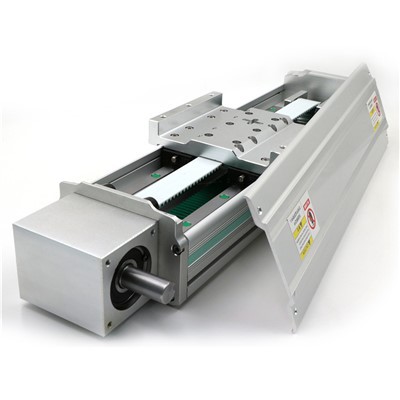
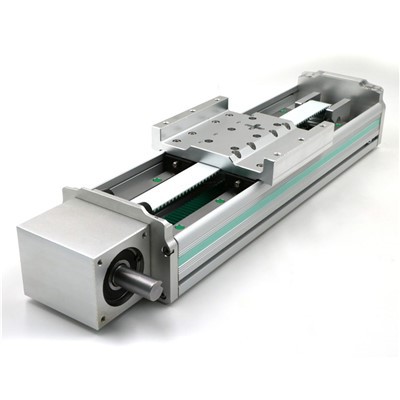


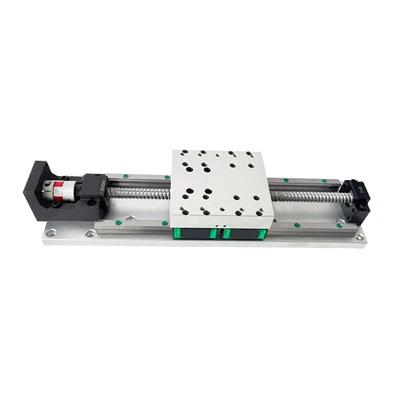
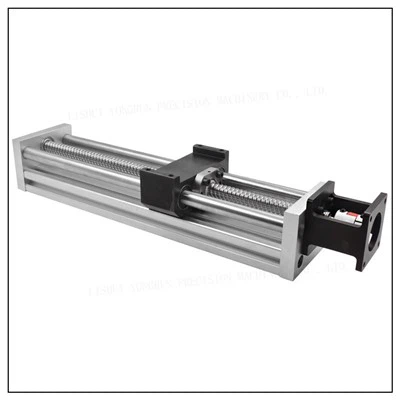
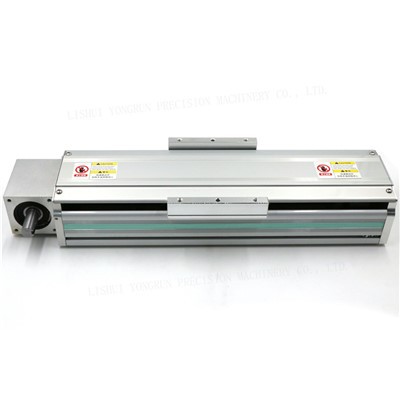
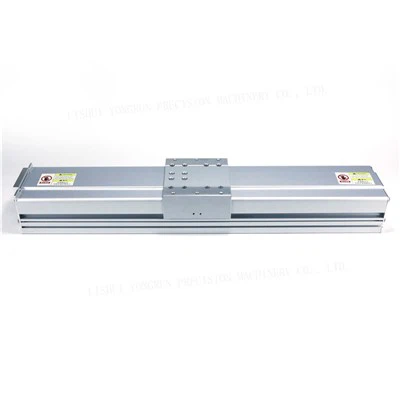
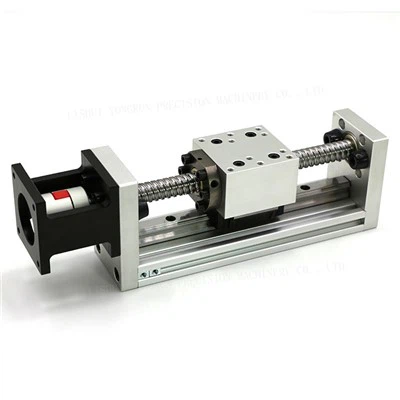
We can provide you the linear modules parts and passed CE and IS09001:2008 quality management systemcertification. High quality and competitive price are always provided.
What is Linear Stage
A linear stage or translation stage is a component of a precise motion system used to restrict an object to a single axis of motion. The term linear slide is often used interchangeably with "linear stage", though technically "linear slide" refers to a linear motion bearing, which is only a component of a linear stage. If you want to know the specifications and prices of Linear Stage, please contact us!
Advantages of Linear Stage
Precision, Accuracy, and Reproducibility
Linear stages offer precise, accurate, and reproducible motion which is challenging to achieve without the correct experimental setup. This is crucial in tasks where even a positioning errors can compromise data quality. The high precision of a linear stage can significantly enhance the quality and reliability of your results.
In many scenarios, reproducibility is critical. Linear stages ensure that you can repeat tasks with a high degree of accuracy each time. In manufacturing, where consistent results are essential for product quality and yield, this ability is especially important.
Stability and Rigidity
Designed to provide stability and rigidity, linear stages minimize vibrations and unwanted movement. When working with instruments or experiments that are sensitive to movement, stability is very important. A linear stage can ensure that your setup remains steady and undisturbed during measurements or observations.
Flexibility and Versatility
Linear stages come in various sizes and configurations, making them adaptable to different experimental setups. From a compact stage for a confined workspace to a long travel stage for movement across greater distances, there are options available to meet your specific requirements.
Many linear stages, including our own range, offer modular designs for easy integration with other equipment.
Automation and Control
Systems with motorized drive mechanisms or computer-controlled systems, like an Ossila linear stage, allow programmable and synchronized movements. Automation not only enhances precision but also reduces human error and allows for efficient, reproducible experiments.
If your application involves repetitive tasks or complex sequences of movements, a linear stage can perform these tasks with precision and consistency. This is valuable in manufacturing, where automation can lead to increased productivity and reduced labor costs.
Time and Efficiency
A linear stage can significantly speed up your workflow, especially when performing repetitive tasks. The smooth and controlled movement eliminates the need for manual adjustments, saving you time and effort.
Additionally, the ability to pre-program movements and positions ensures consistent and efficient experimental procedures.
Future Scalability
As your research evolves, having a versatile linear stage gives you the flexibility to adapt and expand your capabilities easily.
By providing a foundation for automation and precision, linear stages enable scalability in many applications. As industries grow, they can be integrated into larger and more complex systems. Whether in semiconductor manufacturing, 3D printing, or scientific research, linear stages pave the way for increased productivity and innovation as industries continue to progress.
Types of Linear Stage
Motorized: Equipped with electric motors for automated and highly accurate linear motion, motorized linear stages offer controlled and repeatable positioning. They are ideal for industrial automation, semiconductor manufacturing, microscopy, and scientific research.
Our linear stages are equipped with an intelligent stepper motor controller and intergrated rotary encoder. This enables you to move equipment and samples precise distances easily.
Manual: Manual linear stages are mechanically adjusted by hand. When you turn the handle, the carriage moves along a straight path. They are straightforward and cost-effective solutions for applications where automation is not required.
While lacking the precision and automation of motorized stages, manual linear stages find utility in educational settings, prototyping, and situations where simplicity and budget constraints are paramount.
Single Axis: Designed for movement along a single axis, X linear stages enable precise, horizontal movement. They are crucial components in various applications that require precise positioning in one dimension, including optical component alignment, materials handling, and other basic positioning tasks.
Dual Axis: For two-dimensional motion, XY stages are used. Intricate tasks such as circuit board inspection, sample manipulation in scientific research, and material procssing, are possible with XY stages.
Triple Axis: For more advanced applications, XYZ stages offer precise three-dimensional motion. You can use these systems in various complex applications, including 3D printing, medical imaging, and microscopy.
Modular: While some multi-axis stages are integrated, our systems are modular. This means you can combine multiple stages to achieve multi-axis motion, or use them independently in simpler positioning tasks.
High precision linear stages provide a higher level of accuracy and repeatability. They incorporate advanced components, such as C5 ball screws, to achieve reduced error values.
In sectors where the strictest tolerances are essential, including semiconductor manufacturing, microscopy, and nanotechnology, these stages are essential.
Standard Travel: Standard travel linear stages focus on providing a fixed travel distance, typically around 100mm. Offering precise motion over a predetermined range, they are suitable for benchtop lab-based applications.
These stages are cost-effective solutions for applications with restricted motion requirements.
Long Travel: Long travel linear stages enable extended linear motion over greater distances. They often feature larger dimensions and a robust construction to accommodate extended travel lengths, from 200mm to several meters.
Our 200mm stages, remove travel resrictions in lab-scale applications. Whereas, in tasks such as heavy load transport, automated assembly lines, and the manipulation of oversized components, even longer stages are used.
Application of Linear Stage
Scientific Research
In scientific research, linear stages enable the manipulation and positioning of samples and instruments. offer the precision and control required for cutting-edge research and development. Serving as the backbone for accurate and repeatable results, many research applications benefit from the use of linear stage systems
Additionally, linear stages are integral to developing custom research setups, offering flexibility and precision for a wide range of scientific investigations.
● Optics and Photonics: In optics and photonics research, the fine alignment of lenses, mirrors, and other optical components is critical.
Linear stages ensure light is directed and focused correctly in a variety of optical systems. They also enable precise control of laser beams in applications such as laser cutting, engraving, and optical trapping.
Their role in optics and photonics is vital for advancing technologies in telecommunications, imaging, materials analysis, and scientific research.
● Spectroscopy: Precise positioning of samples and detection equipment relative to the light source is essential in spectroscopy. This is particularly important when the focus and alignment of the incident light can significantly impact the quality of data.
Linear stages can also be used to accurately map spectral data over the surface of a sample, contributing to techniques such as spectroscopic imaging.
● Microscopy: In microscopy and imaging, the precision and accuracy of benchtop linear stages are indispensable. The accurate and repeatable positioning of the sample stage, allows for clear, detailed imaging of microscopic structures.
High-resolution microscopy, including techniques like scanning electron microscopy and atomic force microscopy, heavily relies on the precise motion of linear stages. In techniques that require precise probe-sample interaction, linear stages are used to carefully control the position of the probe. In these instances, the linear stage would typically be built into the equipment as part of a single unit.
● Materials Testing: In materials testing, a controlled force is applied to determine the material and mechanical properties. Tensile, compression, fatigue, creep and stress relaxation, and hardness tests all use the precise motion enabled by linear stages.
Ensuring precision and repeatability in materials testing, linear stages contribute to the development of advanced materials for aerospace, automotive, construction, and other industries.
● Nanotechnology: Researchers working at the nanoscale often manipulate and assemble structures at the atomic or molecular level. Extremely high precision linear stages are critical for the accurate positioning and movement of nanomaterials.
Linear stages are the backbone of nanotechnology, driving advancements in materials science, electronics, and medicine. They enable scientists and engineers to explore, manipulate, and innovate at the nanoscale.
Semiconductor Manufacturing
Linear stages are found in the manufacturing sector, where they provide precision positioning of parts in assembly lines. High precision linear stages are employed in micro-manufacturing processes, such as semiconductor chip fabrication, where higher levels of accuracy and repeatability are required.
Several critical processes apply linear stage motion:
● Wafers are positioned precisely during fabrication steps, ensuring accurate alignment of circuit patterns.
● Wafer features are measured and inspected for defects.
● Semiconductors chips are positioned on substrates and connected to one another.
Their role in semiconductor manufacturing is vital for achieving high yields, ensuring device performance, and driving advancements in the electronics industry.
Medical Field
In biomedical research, linear stages are involved in high-resolution microscopy, where precise positioning enables clear, detailed images of microscopic samples. They are also critical in automated biomedical testing to position samples and test instruments with high accuracy.
Alongside this, linear stages are instrumental in:
● DNA sequencing to provide accurate sample movement and data collection
● Microfluids to control the flow of small volumes of liquid
● Bioprinting to position print heads
Linear stages enhance accuracy and repeatability in medical and biotechnological processes, contributing to advancements in healthcare, drug development, and biological research.
Robotics
In the technology sector, linear stages are used to precisely position robotic arms or components. They serve various critical roles:
● End-effector positioning allowing a robot to pick, place, and manipulate objects with accuracy and repeatability.
● Assembly and inspection of components with meticulous positioning control.
● Material handling within conveyor systems, sorting, and packaging.
● Scanning and sensing for detailed data collection and mapping.
● Linear stages contribute to increased automation, productivity, and accuracy in various robotic applications.
● 3D Printing: Also known as additive manufacturing, 3D printing uses linear stages for precise and controlled movement during the printing process.
They aid in the production of accurate and intricate prototypes, functional parts, and custom designs across various industries, including aerospace, healthcare, and automotive.
Aerospace and Defence
Linear stages are indispensable for achieving precision and reliability in various critical sectors. Flight control systems, radar and optics alignment, weapon systems, testing and calibration, and space exploration all require precise motion control.
Enhancing the safety, accuracy, and effectiveness of aerospace and defence systems, the application of linear stages contributes to national security and technological advancements.
Linear Stage Applications
From the microscopic world of scientific research to the grand scale of aerospace and defense, linear stages are essential for precision and control across a multitude of industries and applications.
As technology continues to advance and industries evolve, the significance of linear stages in shaping the future remains steadfast. They are indispensable in the journey of scientific discovery, technological innovation, and industrial excellence.
How to Choose Linear Stage

Accuracy and Precision
Achieving the right accuracy and precision is crucial and can impact the quality and reliability of your data. Slight deviations or inaccuracies can lead to compromised experimental outcomes.
Before choosing a linear stage, you should determine your required level of precision. Our linear stages achieve micrometer-level positioning and we have two levels of precision to choose from. A C7 ball screw is used in our standard precision stages, while a C5 ball screw is used in our high precision stages to reduce positioning error values.
It is useful to consider the repeatability of the stage, which measures its ability to return to the same position consistently. High repeatability is essential for applications demanding reliability.
Load Capacity
Linear stages come with different load capacities. Evaluate the weight and size of the components you need to move. It is crucial to choose a stage that can handle the weight requirements of your specific application. Larger and heavier linear stages typically have more robust constructions which results in higher load capacities. Overloading a stage can result in poor performance, calibration errors, and mechanical damage.
If you want to combine stages to create an XY or XYZ stage, each stage will need to support the weight of the other stages in addition to your apparatus. Choosing a linear stage with a greater load capacity than you need is a good way to future proof your equipment.
Many of our linear stages have a horizontal load capacity of 30 kg and vertical load capacity of 10 kg, while our compact range has a horizontal capacity of 10 kg and vertical capacity of 3 kg.


Travel Range
Our linear stages are available with varying travel distances, from 50 mm to 200 mm. Select a stage that can accommodate the required travel range without any limitations or restrictions.
For most benchtop applications, you will likely need either a 100 mm or 200 mm linear stage. Larger scale applications probably require a long travel linear stage to achieve the desired distance. For both, considering the potential of future scalability can reduce the need to purchase additional equipment.
Modularity
While some multi-axis systems are integrated, our linear stages benefit from a modular design. This allows you to combine any two or three models to create a multi-axis system when you need it.
With our XYZ systems, they can be assembled or used individually to implement precise positioning into an array of positioning tasks, regardless of motion requirements.

Frequently Asked Questions
Q: What is stage linear translation?
Q: What is the difference between a linear actuator and a linear stage?
Q: What is a linear slide?
Q: How do linear stages work?
Q: What is a linear motor stage?
Q: What is a linear stage actuator?
Q: What is the pitch of a linear stage?
Q: What are the linear stages of development?
Q: What is the evaluation of linear stage theory?
Q: What is the linear stage of economic development?
Q: How does a linear stage differ from a rotary stage?
Q: What is the difference between open-loop and closed-loop control in linear stages?
Closed-Loop Control: Closed-loop systems use feedback from sensors (such as encoders) to continuously monitor and adjust the stage's position. This approach provides higher accuracy and precision by correcting errors on the fly, making it ideal for applications requiring precise control.
Q: What is the meaning of linear stages of growth model?
Q: How do micrometer stages work?
As one of the most professional linear stage manufacturers and suppliers in China, we're featured by quality products and good service. Please rest assured to wholesale customized linear stage at competitive price from our factory. For free sample, contact us now.
